
Top Ways AI Technology Is Transforming Travel for Hajj & Umrah Pilgrims
The journey of Hajj or Umrah has always been an emotional experience. This is the case for the millions of pilgrims who travel to Saudi Arabia every single year, who, until recently, have made this pilgrimage as part of long waiting times on crowded transport links and the difficulty of finding buses, and often having little or no information during peak seasons.
Today, there are companies situated in Saudi Arabia looking to harness AI to change everything about pilgrim mobility. Transportation is now faster, much safer, smarter, and overall more comfortable than before. We are now seeing the realities of real-time tracking of buses to crowd management using AI, smart applications, and autonomous services. Here are a few examples of AI-powered solutions that continue to enhance pilgrim transportation in 2026 and beyond.
AI-Powered Apps Making Pilgrim Transport Easier Than Ever
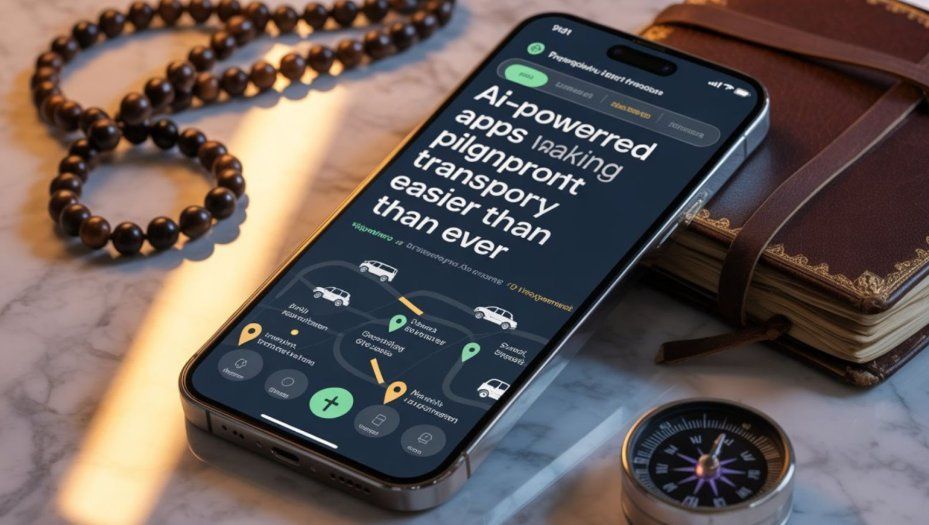
The Saudi Arabian government has launched several digital platforms using AI to streamline Hajj and Umrah pilgrim travel. These real-time applications will alleviate the ambiguity of transport, reducing waiting times and crowds around buses and providing direction on transportation.
Nusuk App: Real-Time Support for Pilgrim Movement
The Nusuk app, previously known as Eatmarna, has become the central digital hub for pilgrims. AI inside the app helps manage:
- Real-time updates on mosque crowd levels
- Queue predictions for transport boarding areas
- Prayer slots and movement planning
- Intelligent options for reducing congestion in transit.
AI evaluates thousands of data points, including bus timings, pilgrims and their volume, weather conditions, and prayer timings, and recommends the best time and route for each pilgrim.
Makka Bus App: AI-Driven Bus Navigation
- The Makka Bus service, a part of one of the biggest AI-supported bus networks in Saudi Arabia, uses smart algorithms for:
- Predicting peak travel hours
- Re-routing buses automatically
- Sending live bus locations to pilgrims
- Estimate its time of arrival (ETA)
- Preventing overcrowding at stations
This makes it easier for pilgrims, especially the elderly, to plan their movements without stress.
Real-time tracking systems lessen confusion and waiting times.
The most effective changes in pilgrim transport involve AI-enabled live tracking.
Smart Bus Tracking Modern buses, used during Hajj and Umrah, are equipped with:
Now, pilgrims can see precisely where a given bus is, how long it will take to arrive, and if any delay in its arrival is foreseen. This avoids uncertainty, long queues, and the common problem of “missing the assigned bus.”
Wearable Trackers for Pilgrims
For safety and better movement management, Saudi Arabia has introduced smart wristbands powered by AI.
These devices can:
- Track the real-time location of elderly pilgrims
- Send alerts in medical emergencies
- Help lost pilgrims reunite with their groups
- Support crowd monitoring and heat detection
This technology has dramatically reduced incidents of lost pilgrims or medical delays.
AI Guaranteeing Maximum Safety During the Trip
Protection is one of the largest covers during Hajj and Umrah. AI is now playing a key role in location, emergency response, and rabble control.
Smart Cameras and Surveillance
AI-backed security cameras are installed across:
- Transport hubs
- Makkah metro routes
- Bus stations
- Masjid al-Haram surroundings
These cameras can detect:
- Unusual crowd movement
- Accidents or hazards
- Long queues forming
- Heat exhaustion cases
Authorities receive instant alerts, allowing them to respond within seconds.
Intelligent Traffic Management
AI systems monitor thousands of vehicles daily and automatically adjust:
- Traffic lights
- Diversion routes
- Road priority lanes
- Bus-only paths
This prevents traffic jams and ensures pilgrims move swiftly between holy sites.
Heat & Health Monitoring
Saudi Arabia also uses AI to track dangerous heat levels.
AI can detect:
- Heat stress risk
- Dehydration symptoms
- Unsafe crowd density
This data helps authorities deploy cooling stations, water distribution teams, and medical responders exactly where needed.
AI Improvements in Pilgrim Transport: Quick Overview
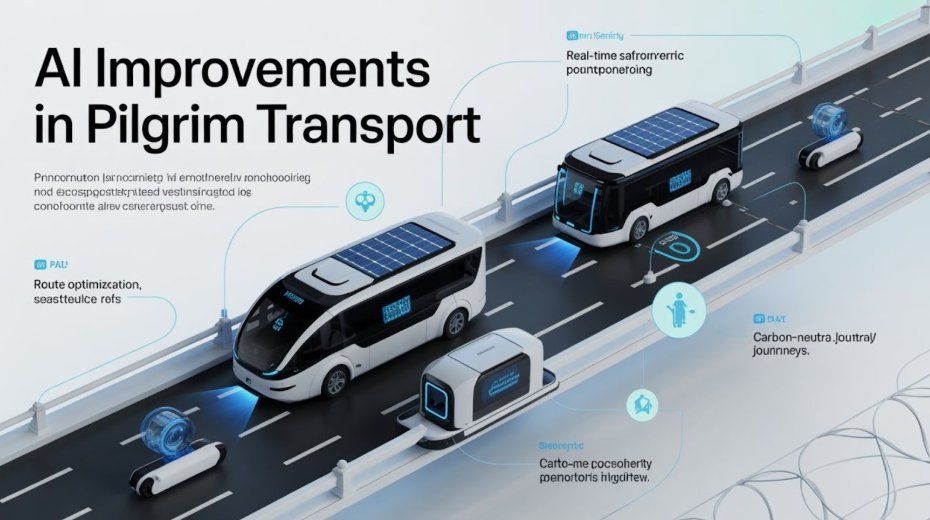
| AI Features | Purpose | Benefits for Pilgrims |
|---|---|---|
| Nusuk App | Smart route planning & crowd updates | Faster movement, less crowding, real-time guidance |
| Makka Bus Tracking | Live bus locations & ETA | Reduced waiting time, no missed buses |
| AI Cameras | Crowd monitoring & safety alerts | Fewer accidents, quicker emergency response |
| Wearable Trackers | Real-time pilgrim location & health alerts | Ideal for elderly safety and locating lost pilgrims |
| Autonomous Shuttles | Driverless mobility inside Haram areas | Comfortable, safe travel with minimal effort |
| Smart Wheelchairs | AI-powered navigation | Easier mobility for the elderly & disabled |
| Traffic AI System | Optimizes bus routes & traffic flow | Faster travel between holy sites |
| Heat Detection AI | Monitors temperature & health risks | Prevents heat stress and dehydration |
AI upgrades comfort and availability for all pilgrims:
Travel for Umrah or Hajj can be physically hard for elderly, disabled, or ill pilgrims. AI effects have helped make a pilgrimage much safer.
Autonomous Electric Vehicles (A-EVs) in Haram Areas
AI-assisted electric units are now transporting pilgrims easily between:
- Masjid al-Haram
- Adjacent Hotels
- Transport Hubs
These driverless vehicles come with sensors and can detect obstacles and seamlessly move pilgrims to ensure they ride safely and comfortably.
Smart Wheelchairs
Saudi Arabia is providing AI-powered electric wheelchairs with:
- Auto-navigation
- Collision prevention
- Easy braking systems
- Smooth steering for elderly pilgrims
This helps reduce physical strain and improve independence.
AI-Optimized Bus Interiors
New long-distance buses come with features like
- Climate-controlled cabins
- Smart temperature adjustment
- AI-guided seating allocation
- Entertainment and prayer information systems
All are designed to enhance comfort throughout the journey.
Crowd Management: AI Preventing Overcrowding and Delays
It is incredibly difficult to manage millions of pilgrims, but AI analytics makes it much easier and much more efficient.
AI Crowd Prediction
The system is able to predict:
- When will the peak
- Where congestion may occur
- How long waiting times?
- Which routes need extra transport support
This helps authorities allocate more buses, volunteers, and staff exactly when and where required.
Automated Route Optimization
During Hajj rituals, transport routes can shift based on safety conditions.
AI recalculates:
- Fastest routes
- Safest paths
- Shuttle availability
- On-ground foot movement
This is vital during Tawaf, Sa’i, Mina, Arafat, and Muzdalifah movements.
Personalized Travel Experience Through AI
AI doesn’t just improve transportation, it personalizes!
Tailored Travel Suggestions
AI inside apps like Nusuk studies:
- Your hotel location
- Prayer timings
- Preferred transport method
- Mobility requirements
Then it recommends:
- Best bus routes
- Ideal departure times
- Less crowded areas
- Real-time alerts
Each pilgrim gets a smoother journey based on their personal circumstances.
Multi-Language AI Assistance
Pilgrims from over 150+ countries face a language barrier.
AI solves this by offering:
- Voice-guided navigation in multiple languages
- Real-time translation
- Emergency communication support
This makes transport easier and stress-free for everyone.
The Future: What’s Coming Next in AI for Pilgrim Transport?
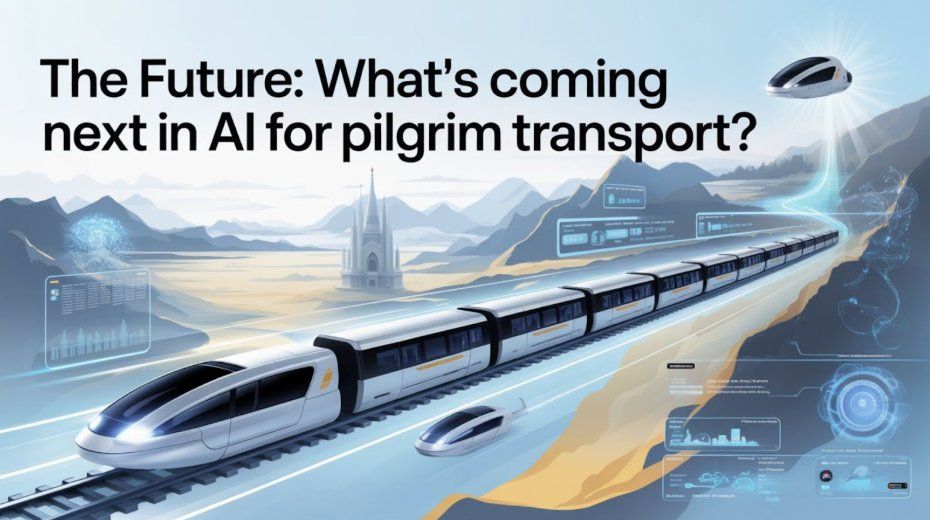
Saudi Arabia is actively developing future-ready transport technology, including:
- AI-powered flying taxis (planned for NEOM & Makkah zones)
- Fully autonomous bus fleets for pilgrimage seasons
- Robot assistants for navigation and mobility
- Smart roads that guide buses automatically
- Hyperloop testing for ultra-fast intercity travel
The message is straightforward:
To transform the travel experience of Hajj and Umrah pilgrims in Saudi Arabia to be one of the safest, easiest, and most technologically advanced travel experiences all over the map.
Conclusion:
Quietly, AI is becoming one of the biggest blessings for pilgrims. Every innovation, intelligent apps, real-time tracking, enhanced transports, and safety facilitation is being done with the sole purpose of bringing pilgrims to their destination in peace, comfort, and dignity. Further, Saudi Arabia's advancements for AI-based mobility are unprecedented in changing the worldview of its citizens and the broader worldview of religious tourism.
As AI technology advances, we can foresee a future where every Hajj and Umrah pilgrimage experience is better planned, customized, and spiritually fulfilling with much less logistical consideration, so there is more time for important spiritual absorption during worship.
FAQ’s (Frequently Asked Questions)
What are some ways AI could facilitate Hajj and Umrah pilgrim flow?
AI could facilitate pilgrim runs through real-time bus tracking, smart routing, automated crowd management, and an AI-enabled mobile app (Nusuk) that will ultimately provide pilgrims with a safer, smarter, and more organized trip with less wait time and congestion, while offering better safety and experience.
What applications use AI to help with pilgrims’ movement in Saudi Arabia?
Some of the top AI-powered applications are the Nusuk app and the Makka Bus application, which display real-time schedules for bus timings, recommended bus routes, notifications of crowded prayer times, and travel advice for pilgrims.
Does Saudi Arabia use AI to enhance safety during pilgrimage?
Yes, AI-enabled cameras, heat monitoring systems, wearable trackers, and emergency alert systems assist authorities with crowd monitoring that incorporates early risk detection and rapid response to medical and safety concerns.
Are the AI transport services accessible to senior or disabled pilgrims?
Definitely, AI technologies, including autonomous electric shuttles, smart wheelchairs, priority routing, and personalized trip recommendations, are improving and enhancing ease of travel for all senior and disabled pilgrims.
What other AI innovation experiments occurring in Saudi Arabia can pilgrims look forward to?
It is developing enhanced systems, including self-driving bus fleets, AI-directed mobility robots, smart roads, and the future possibility of flying taxis, all with the purpose of enhancing the Hajj and Umrah experience.